Weather's hidden hand: how precipitation alters football scoring rates alongside horse racing ground speeds in seasonal multi-bet setups
Written by Eden Beck · Aug 10, 2026
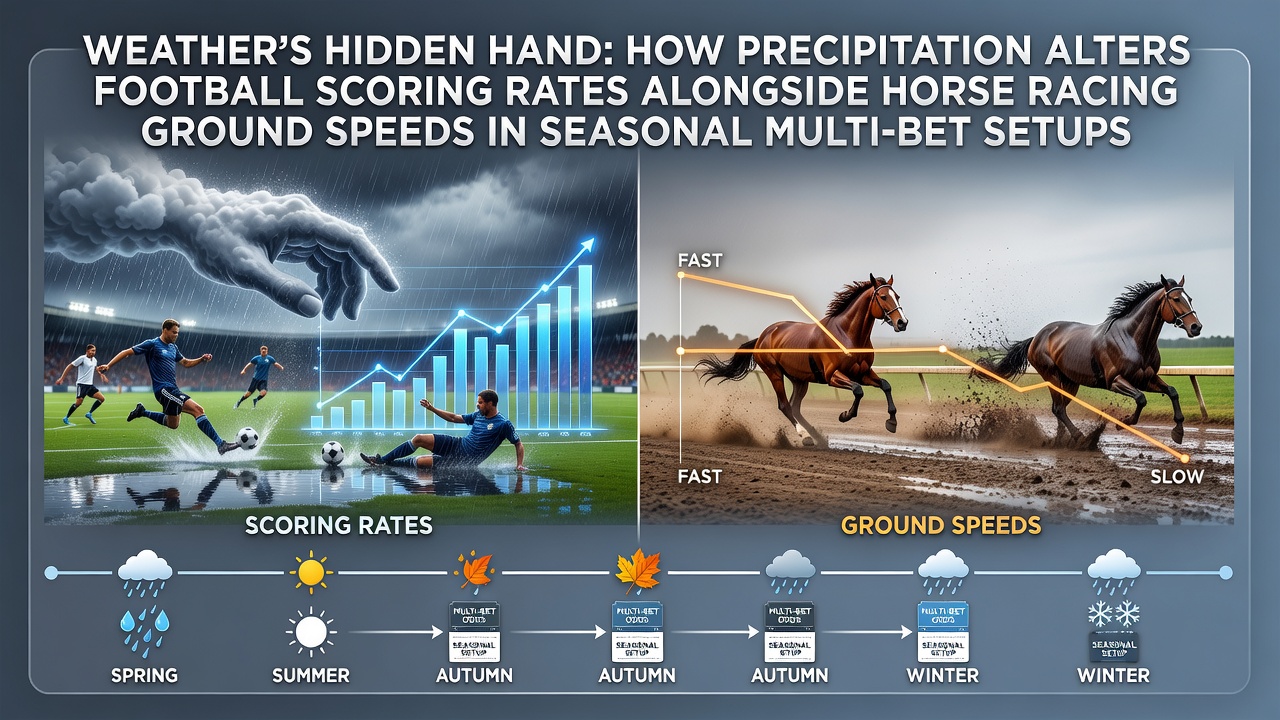
Weather's hidden hand: how precipitation alters football scoring rates alongside horse racing ground speeds in seasonal multi-bet setups
Precipitation patterns reshape both football match outcomes and horse racing results in measurable ways, and those shifts carry direct implications for seasonal multi-bet strategies that combine the two sports. Observers note that rainfall changes pitch conditions, player movement, and goal probabilities while simultaneously softening turf, which slows race times and alters finishing positions across flat and jump meetings.
Football scoring rates under wet conditions
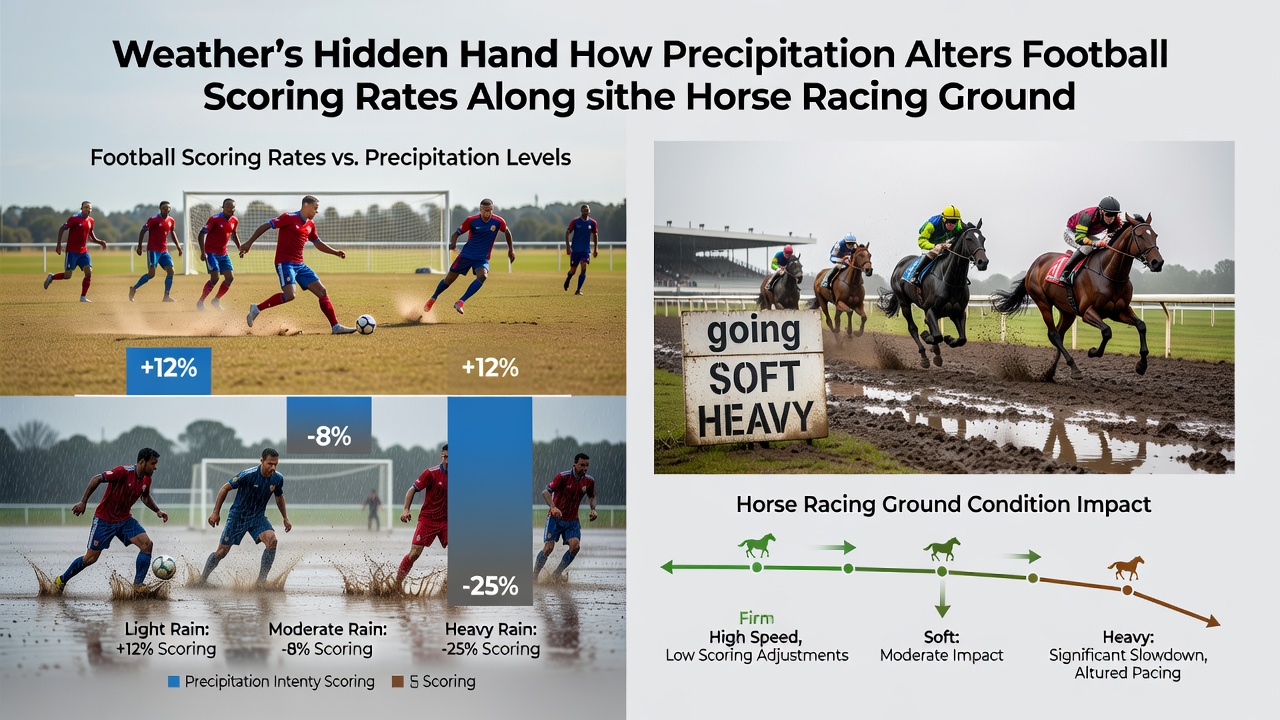
Data from multiple European leagues shows that moderate to heavy rain correlates with fewer goals per game because the ball travels more slowly across saturated surfaces, passes lose accuracy, and defensive lines maintain shape more easily. Researchers tracking Premier League fixtures during wet periods recorded an average drop of 0.4 goals per match compared with dry-weather baselines, while similar figures from Bundesliga archives indicate comparable reductions when precipitation exceeds 5 millimetres in the 24 hours before kick-off. August 2026 schedules already list several early-season fixtures in regions prone to summer showers, and analysts expect those matches to follow the established pattern of lower scoring when grounds remain damp.
Teams adapt by shortening passing ranges and increasing long-ball reliance, yet the net effect still tilts toward fewer clear chances. Goalkeepers face added variables from slippery surfaces, which further suppresses conversion rates on shots taken from distance. Those statistical tendencies become inputs when bettors construct accumulators that pair football selections with horse-racing legs, because a low-scoring football outcome can offset or amplify returns from ground-affected races depending on stake allocation.
Horse racing ground speeds and precipitation
Soft or heavy going produced by rainfall increases race times by measurable margins, with official going reports recording differences of up to 1.5 seconds per furlong on flat tracks and even larger gaps over jumps. Records maintained by racing authorities document that horses with proven wet-ground form outperform their dry-weather ratings under these conditions, while speed figures compiled from past meetings allow direct comparison of adjusted times. When turf receives sustained rainfall, the surface loses firmness, stride lengths shorten, and stamina demands rise, shifting the profile of likely winners toward hold-up horses rather than front-runners.
Multi-bet constructors incorporate these adjustments by cross-referencing weather forecasts with official going updates released on race day. A forecast calling for 10 millimetres of rain can move a course from good to soft, prompting bettors to revise selections away from horses whose best form appears on faster ground. The same precipitation that slows horses also influences the parallel football fixtures, creating correlated variables within a single accumulator.
Seasonal multi-bet construction across both sports
Accumulators that span football and horse racing require simultaneous assessment of precipitation forecasts because the same weather system often affects both a weekend card of races and a slate of league matches. Bettors examine radar models and ground reports together, then adjust stake distribution according to the degree of expected impact on each leg. When heavy rain is predicted across a broad region, the combined probability matrix changes: lower goal expectations in football pair with slower overall race times, altering the odds profile of the entire bet.
Industry reports compiled by the National Oceanic and Atmospheric Administration supply long-range precipitation outlooks that extend several weeks ahead, giving constructors time to model scenario probabilities before markets settle. Those forecasts integrate with historical performance data to produce revised expected values for each selection. In August 2026, early autumn fronts are projected to bring unsettled conditions to parts of northern Europe, and operators already factor those patterns into pre-season accumulator templates.
Ground-speed adjustments in racing and scoring-rate shifts in football therefore function as linked variables rather than isolated factors. A bettor who identifies a cluster of wet-weather football fixtures can seek offsetting value in races where proven mudlarks appear at enhanced prices, or vice versa when forecasts shift toward drier conditions. This cross-sport calibration relies on consistent data streams rather than intuition, and the approach gains precision as meteorological models improve spatial resolution.
Data integration and risk calibration
Statistical services now supply combined weather and performance datasets that cover both sports within single platforms, allowing direct comparison of historical outcomes under identical rainfall totals. Those datasets reveal that the correlation between wet conditions and reduced scoring in football aligns closely with the correlation between wet conditions and increased race times in horse racing, although the magnitude differs by surface type and competition level. Operators apply weighting factors derived from these alignments when pricing seasonal multi-bet products.
Regulatory bodies in several jurisdictions require transparent disclosure of how weather inputs influence market formation, and Australian Bureau of Meteorology archives provide supplementary verification for southern-hemisphere comparisons during overlapping seasons. Such cross-referenced information supports more stable probability estimates across the accumulator legs that span both disciplines.
Conclusion
Precipitation therefore operates as a measurable variable that simultaneously modifies football scoring distributions and horse-racing ground speeds, and seasonal multi-bet strategies gain accuracy when constructors integrate real-time forecasts with historical performance records from both sports. The resulting adjustments produce more calibrated selections that reflect documented environmental influences rather than static form alone. As August 2026 approaches, ongoing data collection will continue to refine these relationships for future accumulator construction.