Weather-Driven Edges: Capitalizing on Rain Delays, Wind Shifts, and Track Conditions Across Global Racing Cards and Tennis Circuits
Written by Riley Richter · Jun 29, 2026
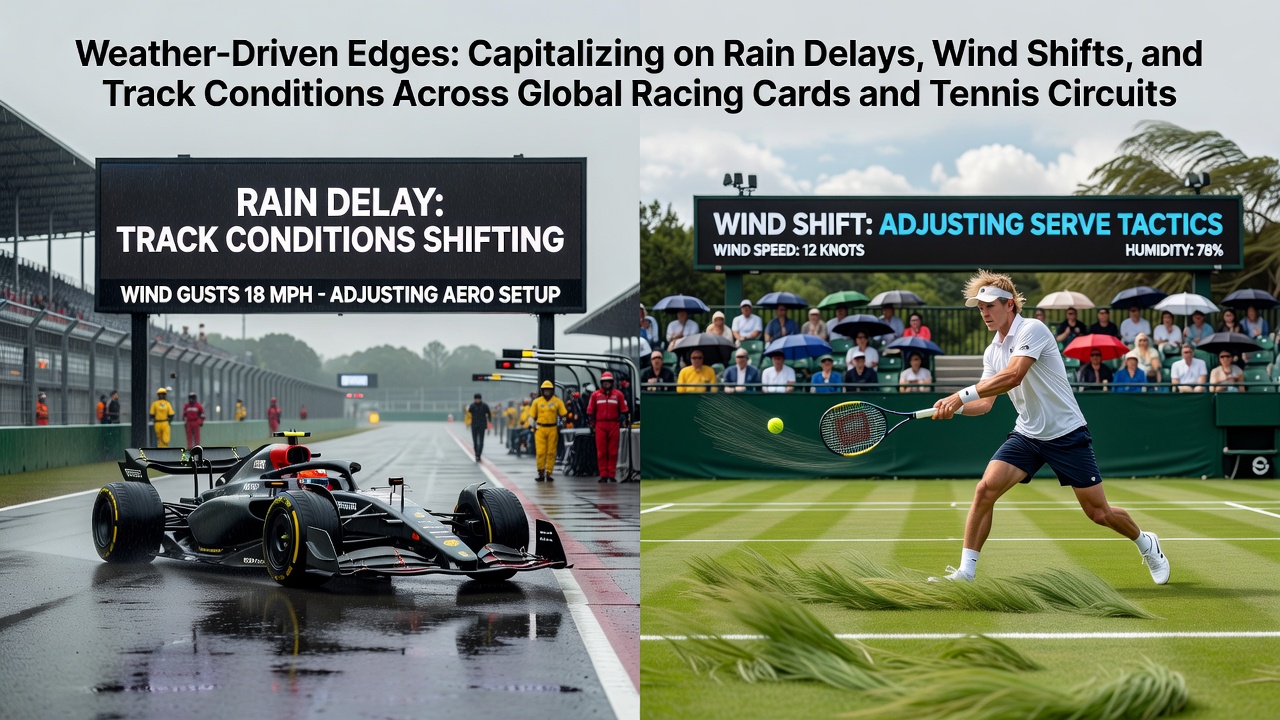
Weather-Driven Edges: Capitalizing on Rain Delays, Wind Shifts, and Track Conditions Across Global Racing Cards and Tennis Circuits
Weather conditions influence performance data and scheduling decisions across horse racing meetings and tennis tournaments on every continent, and analysts track these variables because they alter surface speeds, player movement patterns, and overall event timelines. Rain delays force adjustments to card structures in racing while wind shifts modify ball trajectories on court, creating measurable deviations from baseline statistics compiled over multiple seasons.
Track Conditions and Rainfall Effects in Global Racing
Horse racing surfaces respond directly to precipitation levels, and official going reports issued by racing authorities document changes from firm to soft or heavy ground within hours of rainfall. Data compiled by the Australian Bureau of Meteorology shows that winter rainfall patterns in Victoria and New South Wales produce heavier tracks at Flemington adn Randwick, which in turn lengthen winning times by an average of 3.2 seconds over 1400 metres compared with dry conditions recorded in the same fixtures. Similar patterns appear at North American tracks where the National Weather Service issues precipitation forecasts that racing officials incorporate into pre-meeting assessments.
June 2026 meetings scheduled across Europe and Australia will occur during periods when long-range forecasts already indicate elevated rainfall probabilities in several key jurisdictions, and form analysts adjust speed figures accordingly before final declarations. Observers note that trainers often withdraw horses from races when forecasts predict sudden downpours because the resulting surface changes reduce the chance of replicating prior workout times.
Wind and Rain Impacts on Tennis Circuits
Tennis matches experience comparable disruptions from wind and precipitation, particularly on outdoor courts where serve percentages and rally lengths shift measurably. Research published by the University of Melbourne’s sports performance laboratory examined matches played during the Australian summer and found that wind speeds above 25 kilometres per hour reduced first-serve accuracy by 11 percent on average while increasing unforced errors on returns. Rain delays at venues such as Roland Garros and Wimbledon extend match durations and force players to adapt to altered court drying times, which data from the International Tennis Federation records show correlate with higher rates of service breaks in resumed sets.

June 2026 grass-court and clay-court events will again coincide with seasonal weather transitions in both hemispheres, and tournament schedulers already publish contingency plans that include extended session lengths when forecasts indicate afternoon thunderstorms. Players who compete across both hemispheres adapt training regimens to account for these recurring patterns, while statisticians update hold percentages and return-point win rates to reflect historical performance under similar wind or moisture conditions.
Cross-Sport Data Integration and Scheduling Adjustments
Global racing cards and tennis circuits operate on overlapping calendars, and weather monitoring services supply unified datasets that allow simultaneous evaluation of multiple events. Figures released by the Hong Kong Jockey Club demonstrate that typhoon season rainfall alters track bias at Sha Tin, while concurrent wind patterns affect hard-court play at the nearby tennis facilities, creating parallel shifts in expected outcomes. Analysts combine these datasets because they reveal consistent directional changes across disciplines when similar atmospheric conditions prevail.
European racing authorities and North American tennis organizations both publish daily weather impact summaries during peak seasons, and these reports feed into broader models that track how surface conditions evolve hour by hour. June 2026 fixtures will benefit from improved satellite forecasting accuracy, which already reduces last-minute postponements compared with earlier decades when real-time updates were less precise.
Regional Variations and Historical Patterns
Each racing jurisdiction maintains distinct protocols for reporting track conditions, yet the underlying meteorological drivers remain comparable worldwide. South African racing records indicate that summer thunderstorms at Turffontein produce rapid surface changes that favour horses with proven wet-track form, while Canadian meetings at Woodbine incorporate freeze-thaw cycles documented by Environment and Climate Change Canada. Tennis circuits display parallel regional signatures, with humidity levels in Southeast Asia lengthening rallies on outdoor hard courts and coastal winds in the Mediterranean altering serve placement strategies during clay-court swing events.
Long-term datasets compiled by racing and tennis governing bodies allow identification of recurring weather windows that historically produce the largest deviations from seasonal averages. These windows inform preparation timelines for both athletes and equine competitors because recovery periods between rounds or races shorten or lengthen depending on precipitation volume and wind persistence.
Conclusion
Weather variables continue to shape measurable outcomes across international racing and tennis schedules, and organisations responsible for surface management publish updated reports that reflect real-time atmospheric data. June 2026 events will unfold against established seasonal patterns, and analysts who incorporate these documented effects maintain alignment with historical performance records compiled under comparable conditions.