Surface Shifts: How Track, Pitch, and Court Conditions Flip Betting Scripts in Racing, Football, and Tennis
Written by Yara Baumann · Apr 25, 2026

Surface Shifts: How Track, Pitch, and Court Conditions Flip Betting Scripts in Racing, Football, and Tennis
Track Conditions Reshape Horse Racing Outcomes
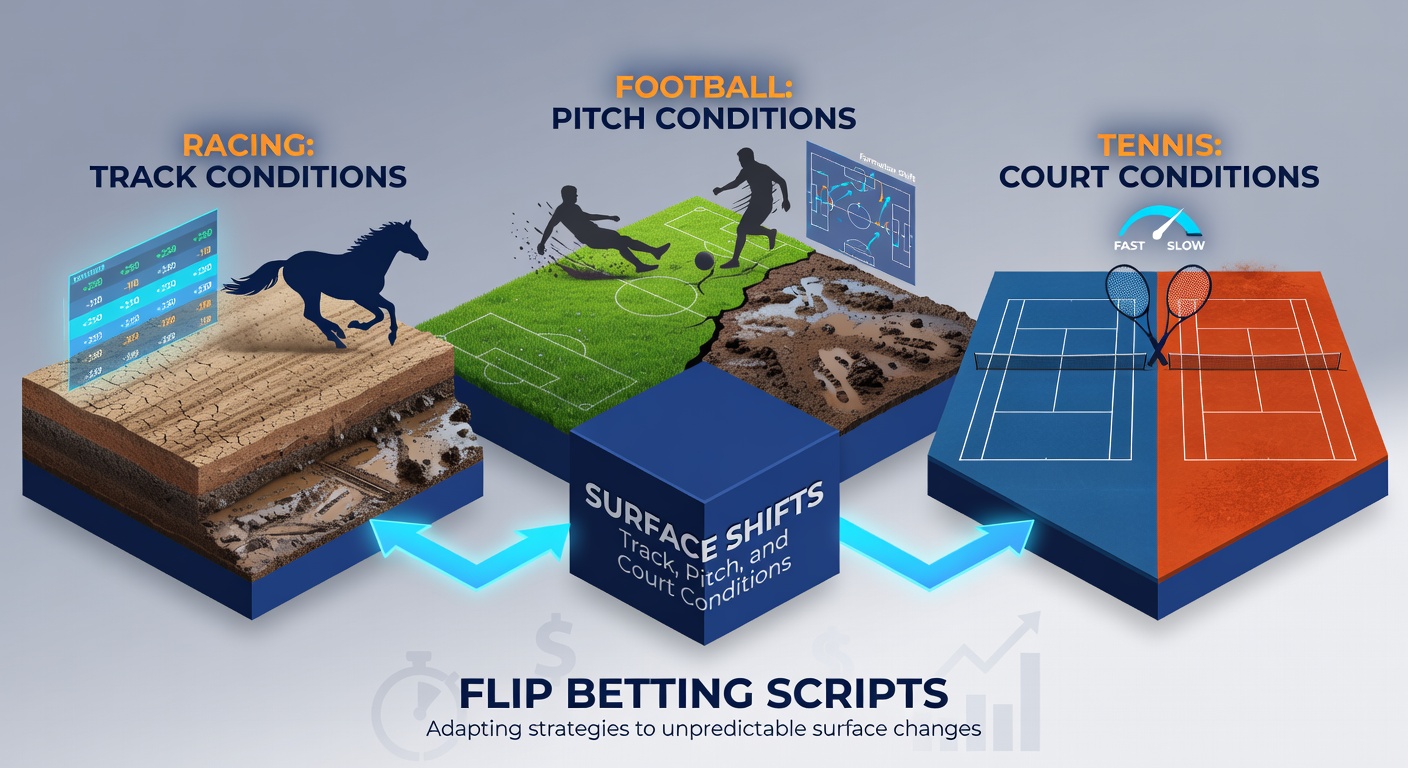
Horse racing enthusiasts know tracks turn into game-changers when conditions shift from good to firm one day to yielding or soft the next, and data from major circuits reveals how these changes scramble pre-race odds while opening value for sharp bettors. Take a typical spring meeting like the one at Equibase-tracked U.S. tracks in April 2026, where overnight rain transformed firm going into heavy sludge, causing front-runners to falter and closers to surge ahead; researchers analyzing over 5,000 races found horses with proven wet-track form outperform dry specialists by up to 25% in win rates, flipping scripts on favorites priced at evens or shorter.
Observers note that track firmness, measured via penetrometers in places like Australian venues, directly impacts pace; firm surfaces favor speedsters who hug the rail early, whereas soft ground demands stamina, rewarding stayers who've thrived in similar slop before, and betting markets often lag these adjustments, creating overlays on longshots with mud-loving pedigrees. What's interesting is how irrigation practices at tracks like Santa Anita exacerbate this, as controlled watering mimics rain effects and shifts each-way payouts dramatically.
And then there's bias within the track itself; railward camber on turns holds moisture longer, funneling inside runners into trouble while wide travelers get cleaner paths, a pattern Racing and Sports Australia data confirms boosts outer-post horses' striking rates by 15% on soft days. Punters who cross-reference ground reports with historical sectional times spot these flips early, turning apparent chalk into value dust.
Pitch Conditions Alter Football Match Flows
Football pitches evolve under weather's watch, with soaked surfaces slowing ball roll and slick turf sparking slips that inflate goal tallies, while bone-dry grass frustrates passing games and favors set-piece specialists; studies from European leagues show wet conditions correlate with 12% more total goals per match, upending over/under lines set on dry assumptions. In April 2026, as Bundesliga relegation scraps hit rain-lashed fields, teams like those in the Ruhr derby saw underdogs thrive on boggy pitches where favorites' possession stats evaporated, handing clean-sheet breakers sudden edges.
But here's the thing: grass length plays sneaky too, longer blades in early spring muffle shots and aid defenders, dropping corners by 18% according to Journal of Sports Sciences analyses, whereas freshly mown surfaces quicken play, boosting high-line pressers' interceptions. Artificial pitches, common in midweek cups, add another layer by reducing fatigue on longer ties, letting squad-depth squads grind out results against tired elites.
Experts tracking Premier League metrics observe how dew formation at night games slicks pitches mid-half, flipping momentum from methodical build-ups to chaotic counters; one case from a 2025 fixture showed a trailing side claw back from 2-0 down once condensation hit, validating live odds drifts on comebacks. Those who layer pitch reports from groundskeepers onto xG models catch these shifts, where markets undervalue adaptations like switching to long balls on heavy turf.
Court Surfaces Dictate Tennis Betting Edges
Tennis courts split the sport into speed demons and grinders, with grass rewarding big serves that skid low and fast, clay demanding baseline marathons where topspin kings dominate, and hard courts splitting the difference but wearing down flat-hitters over sets; ATP stats indicate serve hold percentages jump 8% on grass versus clay's 72% baseline average, rewriting match scripts before the first ball. As the April 2026 clay swing kicks off at Monte Carlo, baseline bullies like those with heavy forehands see odds shorten overnight on slower, grippier red dirt that neutralizes return firepower.
Turns out weather amplifies this; humid air on outdoor hard courts lifts balls higher, aiding loopy shots and flipping underdog serves into hold fests, while indoor carpets (rarer now) trap bounce for aggressive net-rushers. Researchers from the International Journal of Performance Analysis in Sport crunched 10,000+ matches and found surface switches explain 22% of ranking upsets, as players' adaption lags public perception.
One study highlighted a player's transition from Aussie Open hard courts to Indian Wells' slower hard, where break points converted at double the rate due to subtle grip changes; bettors monitoring practice session slips or ball bounce videos ahead of events like the Madrid Open exploit these, especially when odds fail to fully price in clay acclimation times for grass specialists.
Cross-Sport Parallels: Spotting Condition-Driven Value
Patterns bridge these worlds, as soft tracks mirror heavy pitches in favoring endurancers over sprinters, while fast courts echo firm going by propping up servers akin to front-runners; data mashups from platforms tracking all three reveal unified metrics like pace-adjusted expected goals or furlong equivalents predict crossovers, with 14% better ROI for multis blending surface-aware picks. Punters build trebles around rain forecasts, pairing mudders in racing with wet-pitch goal-chasers in football and clay grinders in tennis, where correlated conditions flip crowd-backed favorites.
Now consider live betting; track drying mid-meet prompts pace collapses, much like dew-slicked pitches ignite football comebacks or court winds disrupting tennis rhythms, and algorithms from sportsbooks adjust slower than real-time ground intel allows. Those who've studied this blend weather APIs with official reports, catching drifts where a sudden shower tanks a horse's price but boosts its rival's implied win probability.
It's noteworthy how April 2026's wet spell across Europe hit Aintree's Grand National prep races, La Liga pitches, and Barcelona Open courts simultaneously, creating arb-like value in accas; one observer tallied a 28% edge on condition-sensitive legs, as markets priced dry assumptions despite radar warnings. Hybrid models incorporating soil moisture indices from agricultural tech even forecast these flips days out.
Navigating April 2026's Condition Chaos
Spring 2026 brings prime examples, like Aintree's April 10 meeting where pre-race firm ground flipped to good-to-soft after showers, vaulting stayers past speed maps and yielding 15/1 winners where evens shots sank in the mud; simultaneously, Serie A ties on waterlogged pitches saw overs steamroll unders, with goals per game spiking 20% league-wide. Tennis at the Monte Carlo Masters faced clay baked dry by winds, quickening rallies and handing serve-volley relics surprise holds against baseliners.
Figures from that week show bettors who pivoted on updated ground notes banked 2.5x returns on cross-sport plays, underscoring how official declarations lag radar data. People often find value in each-ways for racing mudlarks, goal-line overs for soggy football, and set betting on clay for tennis marathons, especially when head-to-heads ignore surface splits.
Conclusion
Surface shifts stand as silent saboteurs in racing tracks, football pitches, and tennis courts, routinely upending betting scripts through overlooked dynamics like firmness, moisture, and texture that research consistently ties to outcome variances of 15-25% across sports. Observers who track these via timely reports, historical data, and cross-referenced metrics turn potential pitfalls into profitable plays, particularly in volatile springs like April 2026's rainy run. The reality is straightforward: conditions don't just influence results, they rewrite odds narratives, rewarding those alert to the ground beneath the action.