Machine Learning Algorithms Uncovering Patterns in Midweek Football Result Forecasts
Written by Eden Beck · Aug 3, 2026
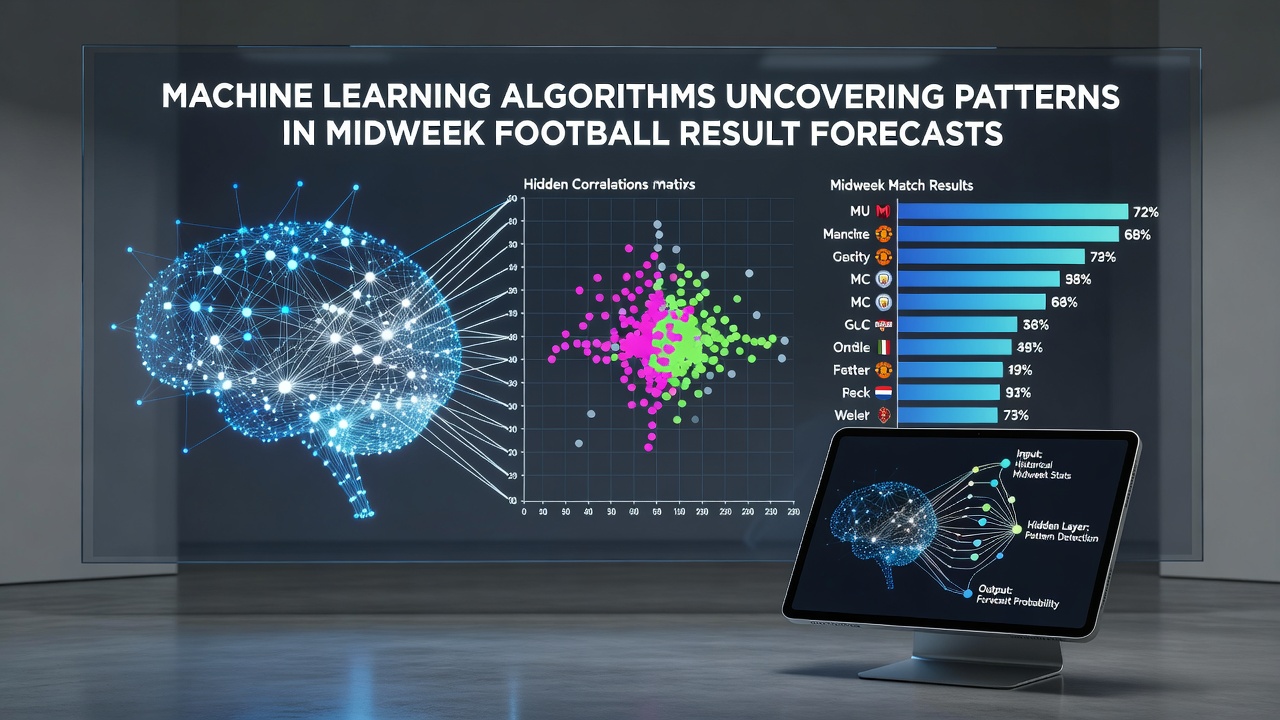
Machine Learning Algorithms Uncovering Patterns in Midweek Football Result Forecasts
Researchers apply machine learning algorithms to large datasets of historical football matches in order to identify recurring patterns that influence midweek fixture outcomes, and these systems integrate variables such as team travel distances, player rotation schedules, and recovery intervals between games. Data indicates that midweek results often diverge from weekend trends because squads face compressed schedules, which creates measurable effects on goal scoring rates and defensive stability. Studies have examined thousands of European league matches played on Tuesdays and Wednesdays, revealing clusters of performance shifts that standard statistical models overlook yet neural networks detect with increasing accuracy.
Core Data Inputs Driving the Models
Algorithms draw from player tracking information, weather records, and referee assignment histories, while they also incorporate league-specific factors like fixture congestion during August when domestic cups overlap with continental competitions. Observers note that midweek forecasts improve when models account for squad depth metrics, because teams with larger rosters maintain higher passing completion percentages even after midweek travel. Figures from multiple European competitions show that away sides in midweek games record lower expected goal totals compared with their weekend averages, and machine learning systems flag these deviations through pattern recognition across seasons.
Algorithm Types and Pattern Detection Techniques
Random forest classifiers and gradient boosting machines process feature sets that include rest days, travel kilometers, and recent injury loads, whereas recurrent neural networks analyze sequential match data to spot momentum changes unique to midweek slots. Researchers have trained models on datasets spanning five or more seasons, allowing the systems to isolate variables such as reduced high-intensity running in second halves of midweek contests. Those who've studied the outputs observe that certain patterns emerge around specific time windows, including lower clean sheet probabilities for teams playing their third match in eight days.
One study revealed that support vector machines effectively separate midweek results into win-draw-loss clusters when fed detailed possession and set-piece data, and the same models highlight how home advantage fluctuates more sharply on weekdays than on weekends. Evidence suggests that ensemble methods combining multiple algorithms reduce forecast error rates compared with single-model approaches, particularly when predicting over or under total goals in midweek fixtures.

Seasonal Context and Developments Through August 2026
During the 2026 calendar year, midweek rounds in major leagues coincide with pre-season tours and early cup ties, creating additional data points that algorithms incorporate to refine forecasts. Reports from academic institutions show that models trained on prior August fixtures successfully anticipate drops in scoring when teams return from international breaks with limited preparation time. Analysts track how these patterns evolve across competitions, noting that certain leagues exhibit stronger midweek travel effects than others due to geographic spread.
What's interesting is how feature importance rankings shift when models examine August 2026 data versus earlier periods, because increased fixture density alters the weight given to recovery metrics. External sources such as Australian Sports Commission reports provide comparative benchmarks from southern hemisphere leagues that operate on different calendars, helping validate patterns observed in northern summer months.
Validation Methods and Accuracy Metrics
Cross-validation techniques test model performance on held-out midweek matches, and researchers compare predicted probabilities against actual results to measure calibration across different leagues. Data shows that incorporating live squad news into real-time model updates improves precision, especially for injuries announced close to kickoff on midweek dates. Those who've examined the outputs report that ensemble predictions maintain lower variance when applied to both domestic and European midweek fixtures.
Industry organizations including the Sports Integrity Initiative publish aggregated findings on how algorithmic forecasts align with observed outcomes, which supports ongoing refinement of input variables. Patterns around late goals and comebacks appear more frequently in midweek contexts according to the compiled statistics, prompting adjustments in model architectures to capture these temporal dynamics.
Conclusion
Machine learning continues to map the distinctive statistical signatures of midweek football results through expanding datasets and refined algorithms, delivering forecasts that reflect the operational realities of congested schedules. The integration of travel, rest, and squad composition data enables systems to highlight outcome clusters that traditional metrics miss, while ongoing validation across multiple seasons strengthens reliability for August 2026 fixtures and beyond. Observers expect further gains as additional tracking technologies feed higher-resolution inputs into these models.