Jet Lag and Journey Fatigue: How Travel Distances Affect Outcomes in Global Tennis Tours and League Football Matches
Written by Mia Schmidt · Jul 18, 2026
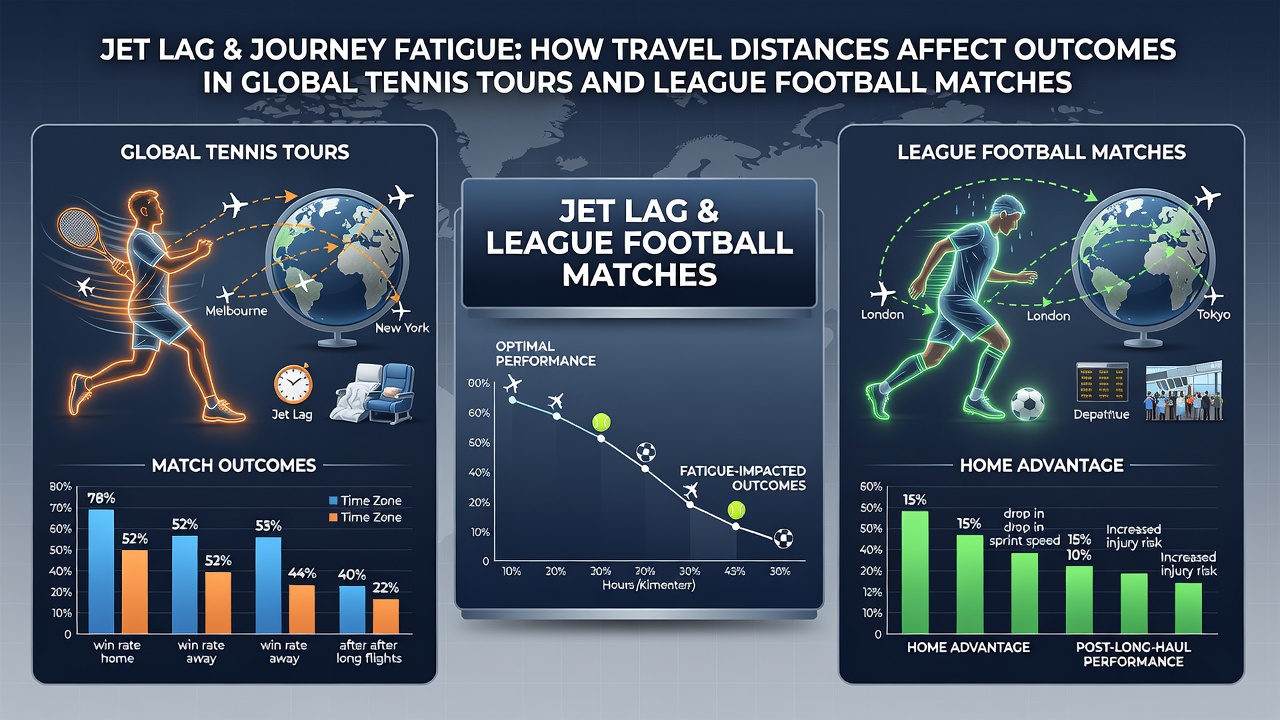
Jet Lag and Journey Fatigue: How Travel Distances Affect Outcomes in Global Tennis Tours and League Football Matches
Travel across multiple time zones disrupts circadian rhythms in athletes, and this disruption shows measurable effects on performance in both tennis and football. Researchers track how long-haul flights alter sleep patterns, reaction times, and recovery rates, with data collected from major tours and leagues over several seasons. Players who cross more than five time zones often experience reduced serve accuracy in tennis and slower sprint speeds in football during the first 48 hours after arrival, according to physiological monitoring studies. Tennis schedules place athletes on frequent intercontinental journeys, from the Australian Open in January through the clay-court swing in Europe and then the North American hard-court events. The ATP and WTA calendars require competitors to adapt quickly between hemispheres, and records from 2024 through 2026 indicate that athletes traveling eastward suffer larger performance drops than those traveling westward. In July 2026, the pre-Wimbledon grass-court tournaments coincide with several players returning from South American or Asian events, creating clusters of short recovery windows that medical staff monitor closely.Physiological Mechanisms Behind Performance Changes
The body’s internal clock governs hormone release, core temperature, and muscle function, yet rapid relocation throws these systems out of alignment. Studies using actigraphy watches on professional tennis players reveal that melatonin onset shifts by 30 to 90 minutes per day after eastward flights, delaying peak alertness until several days later. Football squads crossing the Atlantic for pre-season tours or mid-season friendlies display similar patterns, with GPS data showing decreased high-intensity running distances in the opening matches.
Researchers note that jet lag compounds with journey fatigue from cramped seating, cabin pressure changes, and disrupted nutrition. These combined stressors elevate cortisol levels and reduce glycogen replenishment, effects documented in papers published by the Australian Institute of Sport. Teams that implement structured light-exposure protocols and scheduled meals report faster restoration of baseline metrics, though complete adaptation still requires one day per time zone crossed.
Evidence From Tennis Tours
Grand Slam performance databases show that players arriving from flights longer than eight hours win fewer sets in their opening matches compared with those who travel shorter distances. A longitudinal analysis covering 2018 to 2025 found an average 7 percent drop in first-serve percentage among competitors who had crossed six or more zones within 72 hours of a match. Observers tracking the 2026 season note that several top-ranked players scheduled extra rest days before North American hard-court events following European clay tournaments, reflecting awareness of these patterns.
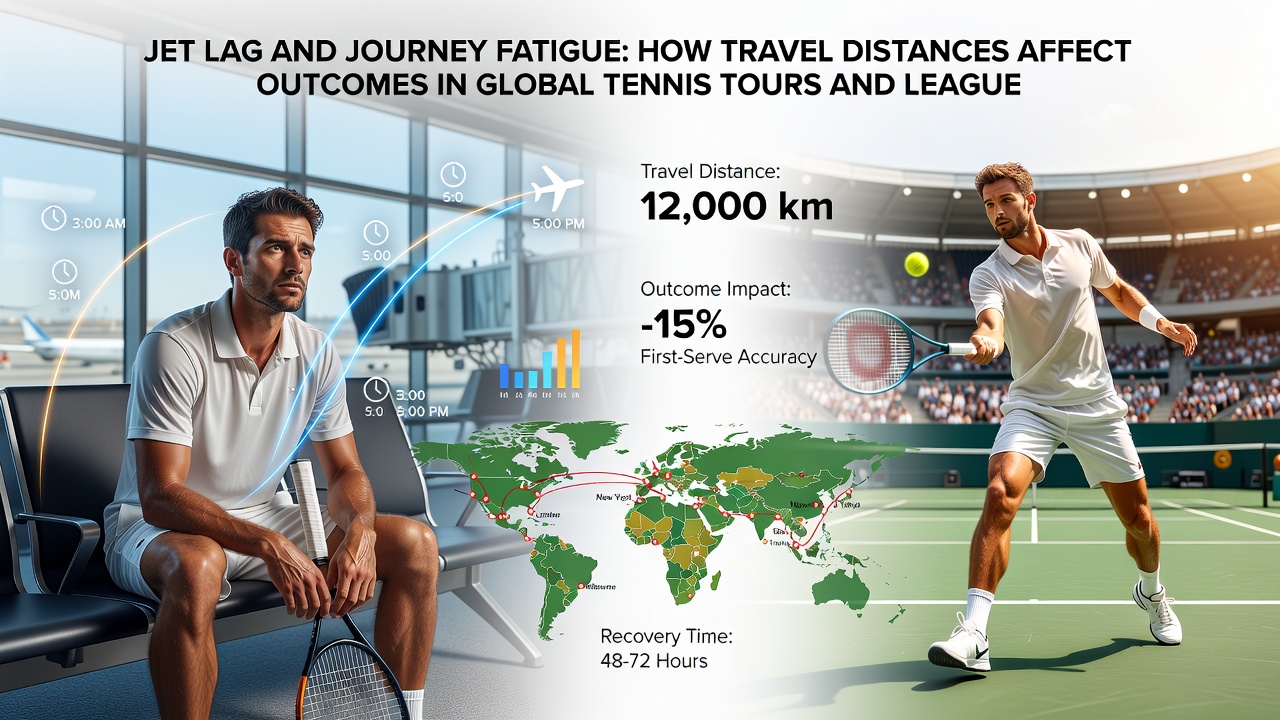
Qualifying rounds add another layer, because lower-ranked players often string together multiple long flights to reach main-draw entry. Data collected at the 2025 US Open indicated that qualifiers traveling from Asia recorded higher rates of unforced errors in early rounds than those based in the Americas. Medical teams now use wearable devices to flag individuals whose sleep efficiency falls below 85 percent, prompting schedule adjustments where possible.
Patterns Observed in League Football
European domestic leagues contain fewer extreme time-zone shifts than tennis calendars, yet Champions League and Europa League fixtures force clubs across continents. English Premier League sides traveling to matches in the Middle East or Asia for summer tournaments return with documented reductions in total distance covered during the first domestic fixture. Bundesliga clubs report similar trends after winter training camps in North America or Australia, with match-tracking systems capturing lower acceleration counts in the opening 30 minutes.
North American leagues add domestic long-haul elements. MLS teams crossing multiple time zones for regular-season games show a statistically significant decline in expected goals created when matches occur within 48 hours of arrival, according to figures compiled by the league’s sports science unit. Recovery protocols now include targeted napping schedules and adjusted training loads on travel days, measures adopted after internal reviews of 2023 through 2025 data.
July 2026 Scheduling Context
The 2026 FIFA World Cup approaches in June and July, placing additional strain on club schedules for players involved in national-team commitments. European leagues finish their seasons in May, yet several clubs schedule July friendlies in Asia and North America to prepare squads for the expanded tournament format. Medical staff anticipate cumulative fatigue from these extra journeys, especially for athletes already managing recovery from domestic campaigns.
Tennis calendars in July 2026 include the transition from Wimbledon grass to the North American hard-court swing, with players often routing through different continents for exhibition events. Organizers have adjusted start times for evening sessions in certain tournaments to accommodate athletes still adjusting to local clocks, a change driven by performance-tracking reports from prior seasons.
Recovery Strategies and Organizational Responses
Teams and individual athletes adopt light-box therapy, strategic caffeine timing, and controlled hydration to accelerate circadian realignment. National Olympic committees and sports institutes publish guidelines based on laboratory simulations of time-zone shifts, and these resources inform both tennis and football protocols. League governing bodies now require minimum rest intervals between certain intercontinental fixtures, although enforcement varies by competition.
Monitoring technology continues to evolve, with heart-rate variability and sleep-stage tracking providing real-time feedback to coaching staff. Data integration across multiple seasons allows analysts to predict which players may struggle most after specific travel routes, enabling targeted rotation decisions. The cumulative evidence underscores that distance and direction of travel remain consistent variables influencing match outcomes in both sports.
Conclusion
Travel distance and time-zone displacement produce measurable physiological changes that affect athletic output in global tennis tours and league football. Longitudinal records, physiological monitoring, and scheduling adjustments across multiple seasons demonstrate consistent patterns rather than isolated incidents. Organizations continue to refine recovery frameworks as calendars expand and data collection improves, yet the fundamental relationship between journey length and early-match performance persists in available evidence.