Charting Seasonal Weather Impacts on Outdoor Event Pricing Models for Multi-Sport Data Integration
Written by Eden Beck · Jul 2, 2026
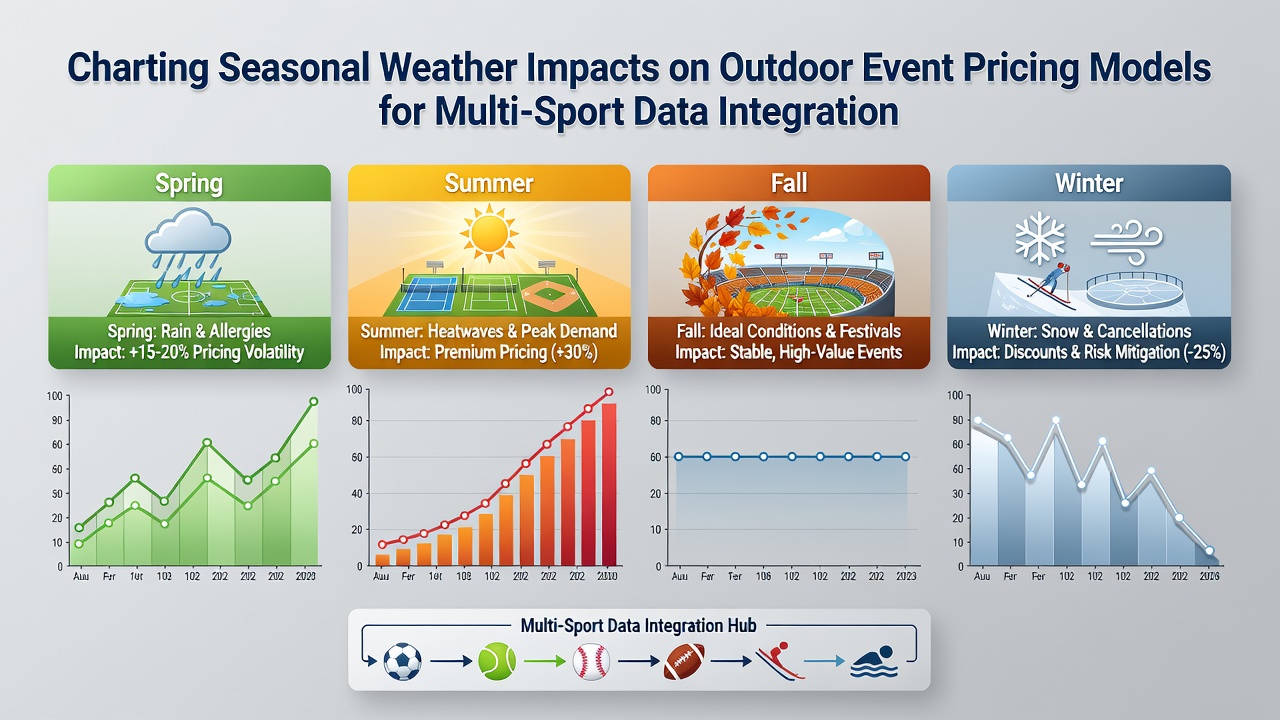
Charting Seasonal Weather Impacts on Outdoor Event Pricing Models for Multi-Sport Data Integration
Outdoor sporting events face direct financial pressures from shifting weather conditions throughout the year, and pricing models now incorporate seasonal data streams from tennis tournaments, horse racing meets, and football fixtures to adjust costs in real time. Organizers track variables such as temperature ranges, rainfall probabilities, and wind speeds because these factors alter venue operations, attendance projections, and equipment requirements across different disciplines. Integration platforms combine historical records with current forecasts to generate dynamic price tiers for tickets, concessions, and sponsorship packages.
Seasonal Patterns and Their Effects on Event Operations
Spring and autumn shoulder seasons bring variable precipitation that forces event planners to factor in tenting expenses and drainage upgrades at racecourses and tennis complexes, while summer heat waves increase cooling system demands at open-air football stadiums. Data sets from multiple sports reveal consistent correlations between humidity levels above 70 percent and reduced ticket uptake in afternoon sessions. Winter months introduce frost risks that affect turf conditions at equestrian venues and require additional labor for pitch protection at soccer grounds. These recurring cycles drive the need for unified databases that merge weather archives from tennis grand slams, thoroughbred racing calendars, and professional football leagues.
Data Integration Across Sports Disciplines
Multi-sport platforms aggregate inputs from national meteorological services and venue-specific sensors to create unified dashboards that feed pricing algorithms. Researchers at institutions like the University of Melbourne have documented how combining Australian Bureau of Meteorology rainfall statistics with European Centre for Medium-Range Weather Forecasts temperature projections improves accuracy for scheduling decisions that influence revenue forecasts. Event managers in North America similarly draw on National Oceanic and Atmospheric Administration datasets to calibrate summer pricing for baseball and golf tournaments that share outdoor infrastructure concerns with European football and tennis circuits. The resulting models adjust base rates upward when forecasts indicate prolonged dry spells that raise irrigation costs or downward when moderate temperatures support higher attendance without added amenities.
July 2026 Outlook and Projected Adjustments
July 2026 falls within peak summer scheduling windows for several major outdoor competitions, and integrated weather models already project elevated heat indices across North American and European venues that host simultaneous tennis, racing, and football events. Pricing frameworks anticipate increased expenditure on hydration stations and shaded seating, prompting organizers to implement tiered ticket structures that offset these outlays through premium packages. Historical July data from previous years shows average temperature spikes of 2 to 4 degrees Celsius above long-term norms in key regions, which correlates with measurable shifts in concession pricing and broadcast rights valuations when multiple sports share overlapping calendars.
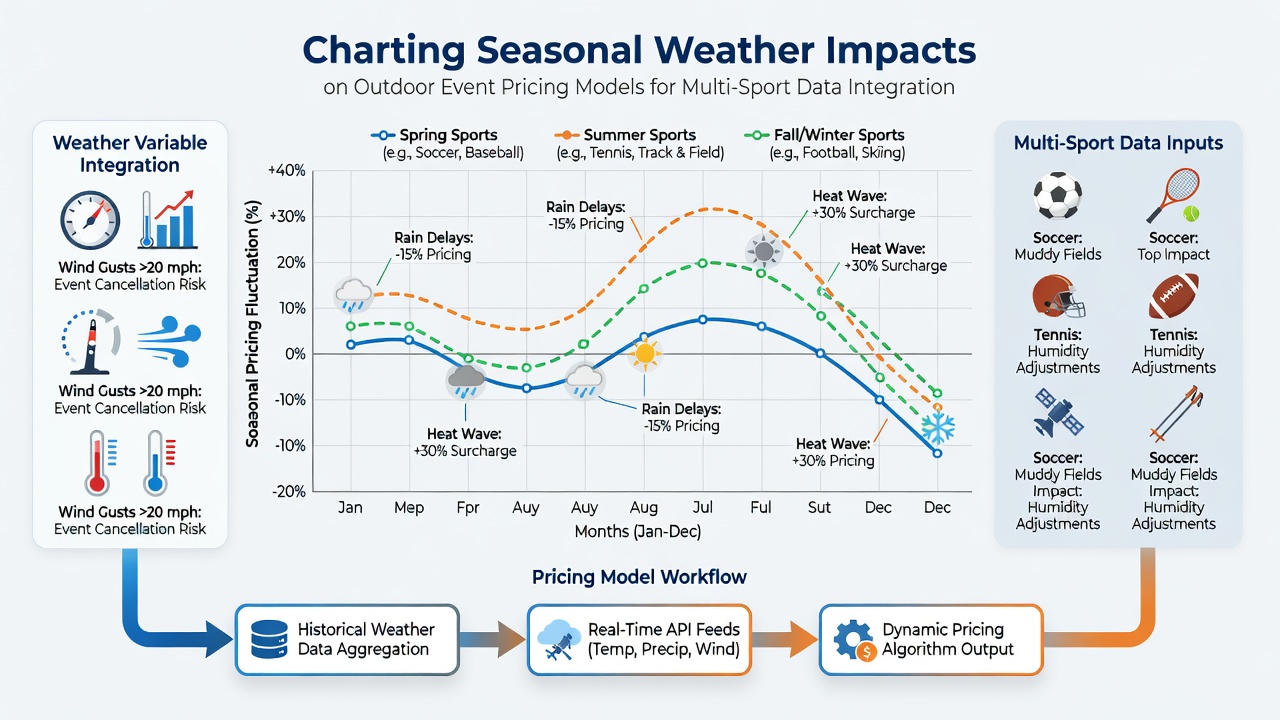
Algorithmic Pricing Mechanisms and Risk Allocation
Modern pricing engines employ machine learning layers that weigh seasonal weather probabilities against attendance elasticity curves derived from past events across sports. When integrated datasets flag a 40 percent chance of afternoon thunderstorms during a combined racing and tennis weekend, algorithms automatically elevate covered seating premiums while discounting general admission zones to maintain overall revenue targets. Observers note that these automated responses reduce last-minute discounting needs because advance adjustments already account for typical July precipitation patterns observed in both temperate European circuits and subtropical Australian meets. Risk allocation extends to insurance products that reference the same multi-sport weather indices, allowing organizers to transfer portions of potential losses from weather-driven cancellations or postponements.
Regional Variations in Weather-Driven Pricing
European venues experience more pronounced spring rainfall impacts that elevate temporary roofing costs at football and tennis sites, whereas North American facilities contend with summer humidity effects that alter player performance metrics and spectator comfort indices used in pricing formulas. Australian events during the same calendar windows often incorporate bushfire smoke and extreme heat protocols that feed into separate cost multipliers within the integrated models. Cross-regional comparisons compiled by academic teams demonstrate that unified data frameworks improve pricing precision by 15 to 22 percent compared with single-sport forecasting approaches, according to analyses published in sports management journals. These gains arise because shared variables such as wind speed thresholds affect equipment stability at race tracks and court surfaces alike.
Future Developments in Integrated Modeling
Continued expansion of sensor networks at outdoor venues will further refine seasonal inputs available for pricing calculations, enabling finer distinctions between morning and evening sessions across concurrent sports calendars. Industry reports indicate that organizations adopting these integrated approaches achieve more stable revenue streams because weather contingencies become embedded variables rather than reactive adjustments. July 2026 events will serve as additional test cases for validating model outputs against real-time atmospheric conditions recorded at multi-sport complexes worldwide.
Conclusion
Seasonal weather data now forms a core component of pricing strategies for outdoor events that span tennis, horse racing, and football schedules, and multi-sport integration platforms deliver the analytical foundation required for accurate cost forecasting. Continued refinement of these systems through expanded data sources supports consistent operational planning regardless of geographic or disciplinary differences.