Calendar Effects on Betting Markets: How Fixture Congestion, Tournament Scheduling, and Meeting Density Impact Value in Football-Tennis-Racing Combinations
Written by Eden Beck · Jun 15, 2026

Calendar Effects on Betting Markets: How Fixture Congestion, Tournament Scheduling, and Meeting Density Impact Value in Football-Tennis-Racing Combinations
Calendar structures shape betting markets across football, tennis, and horse racing because fixture lists, tournament brackets, and race meeting calendars create measurable patterns in team performance, player fatigue, and field strength. Observers note that these effects emerge when events cluster within short windows, and data from multiple seasons shows consistent shifts in odds value for accumulators that combine the three sports.
Fixture Congestion Patterns in Football
Football schedules pack multiple competitions into overlapping periods, and researchers have tracked how consecutive matches affect key metrics such as goals scored and clean-sheet rates. When clubs play three matches in eight days, historical datasets indicate a drop in expected goals for the third fixture, while away sides often see their win probability adjust downward by several percentage points. June 2026 brings additional pressure because the FIFA World Cup begins on 11 June, forcing national teams into rapid preparation cycles that coincide with domestic season wind-downs in several leagues.
European domestic cups and continental ties frequently land on midweek slots during this period, and analysts examining past World Cup years have recorded elevated draw frequencies in league games played immediately before international windows. Bettors who monitor rest-day differentials across football fixtures can identify lines where bookmakers have not fully adjusted for the workload carried by key players.
Tournament Scheduling in Tennis
Tennis calendars place Grand Slams and ATP or WTA events in tight succession, and surface transitions add another layer of complexity. The shift from clay at Roland Garros to grass at Wimbledon creates a compressed recovery window for players who reach deep runs in both tournaments. Performance statistics compiled by tournament data providers show that players with fewer than four rest days after a long clay-court campaign win fewer service games on grass in their opening matches.
June 2026 aligns the end of the French Open with the start of the Wimbledon qualifying and main draw, while the World Cup football schedule runs in parallel. This overlap means some tennis players also face distractions from national team commitments or travel disruptions, and historical records indicate that retirement rates rise slightly in the first week of Wimbledon when the prior tournament has extended late.
Meeting Density in Horse Racing
Race meetings cluster around festivals and holiday periods, and field sizes, pace scenarios, and track conditions change when multiple cards occur within a few days. Flat racing in Britain and Ireland sees increased double-headers and evening meetings during June, while Australian winter racing features condensed programs in the southern hemisphere. Data from racing authorities shows that horses running within five days of a previous start record lower win percentages unless they are specialists at quick recovery.
June 2026 will include Royal Ascot alongside regional meetings and international fixtures, creating dense programs where trainers must select targets carefully. Form students who cross-reference official ratings with actual days since last run often locate value in each-way markets when density compresses the usual recovery timeline.
Combined Effects Across Football, Tennis and Racing
Accumulators that mix the three sports encounter layered calendar influences because fatigue in one sport can coincide with scheduling quirks in another. A football side playing midweek before a weekend fixture may show reduced goal output on the same day a tennis player contests a fifth set after limited rest, while a race meeting features a large field of horses on short turnaround. Studies of multi-sport betting pools indicate that these simultaneous pressures widen the gap between opening odds and closing odds when bettors identify the affected legs early.
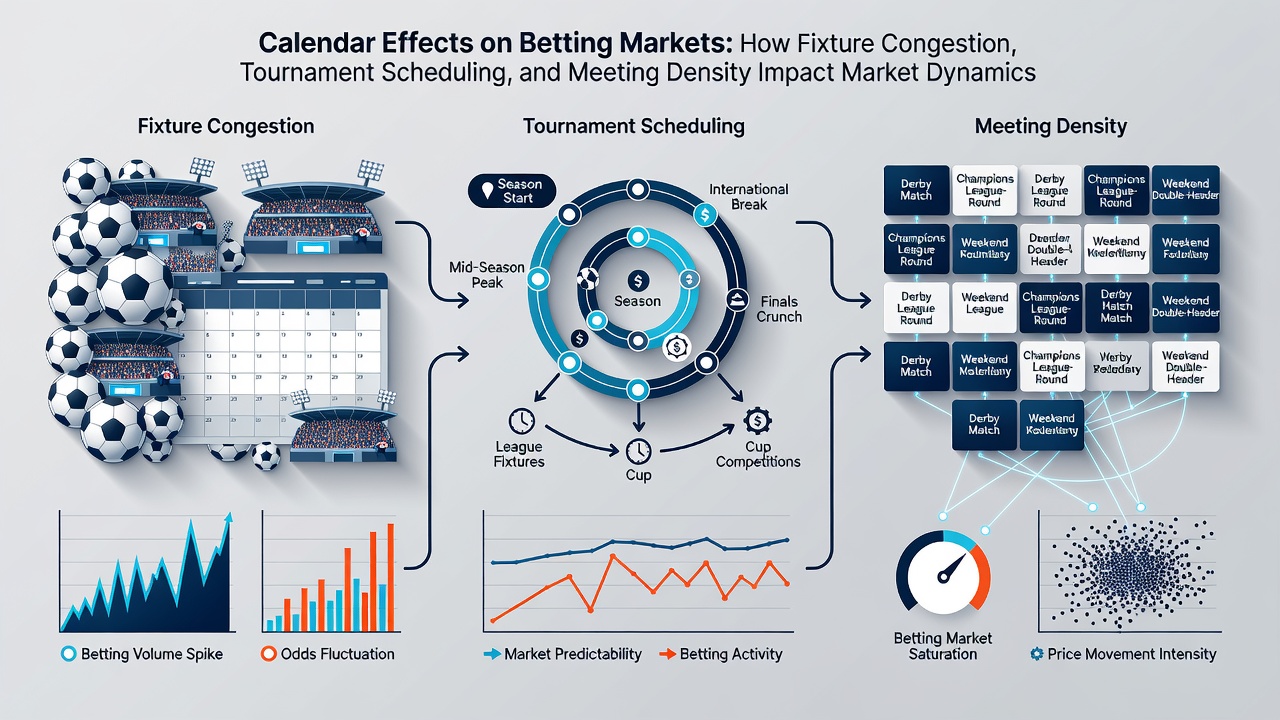
Market makers adjust lines using historical averages, yet rapid schedule changes sometimes leave residual value in niche markets such as player total games in tennis or exacta combinations in racing. Cross-sport bettors who track rest metrics and surface or track biases simultaneously have documented instances where the combined edge exceeds the margin built into the accumulator price.
Observable Trends Around June 2026
June 2026 features the opening matches of the FIFA World Cup alongside the transition from French Open to Wimbledon and a packed sequence of European and Australian racing festivals. Scheduling databases reveal that several football leagues schedule catch-up rounds immediately before the tournament, tennis draws contain more qualifiers advancing after main-draw withdrawals, and racing trainers face decisions about running horses on consecutive days at different tracks. These conditions create recurring statistical signatures that appear in both pre-match and in-play odds across the three sports.
Industry reports from organisations such as Sports Integrity Initiative have examined how compressed calendars affect participant availability, and separate academic work from the University of Queensland has quantified performance decay in equine athletes under dense racing schedules. Bettors who integrate these datasets with fixture lists can isolate legs where the implied probability diverges from observed outcomes.
Conclusion
Calendar effects operate through measurable changes in workload, recovery time, and competitive density across football, tennis, and horse racing. When these factors align within the same betting window, particularly during periods such as June 2026, they produce identifiable shifts in market pricing that reward systematic tracking of rest intervals, surface transitions, and meeting clusters. The patterns remain consistent enough across seasons that structured analysis of scheduling data continues to inform accumulator construction in these combined markets.